Find useful resources for your research or next presentation.
Textes juridiques fondamentaux
Les textes juridiques fondamentaux sont les sept documents qui constituent le fondement du cadre juridique de la Cour : le Statut de Rome de la Cour pénale internationale (le Statut), le Règlement de procédure et de preuve, les Éléments des crimes, le Règlement de la Cour, le Règlement du Greffe, le Règlement du Bureau du Procureur et le code de conduite professionnelle des conseils. Parmi eux, le plus important et le premier à avoir été adopté et à être entré en vigueur a été le Statut. Dans son sillage, les six autres textes ont pris effet à différents moments de l’histoire de la Cour. Ils peuvent tous être modifiés conformément à la procédure d’amendement qui leur est propre.
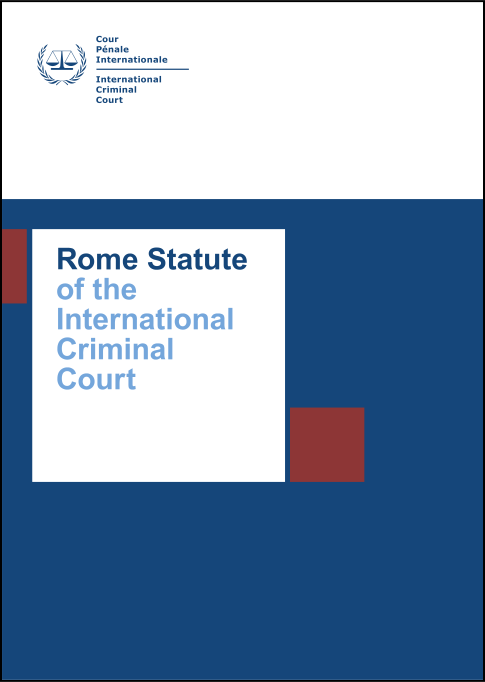
Le Statut de Rome de la Cour pénale internationale est le traité international qui a fondé la Cour. Composé d’un préambule et de 13 chapitres, il définit le cadre qui régit cette organisation. Adopté lors de la Conférence de Rome le 17 juillet 1998, il est entré en vigueur le 1er juillet 2002, donnant ainsi naissance à la Cour pénale internationale. Voir notre histoire.
Le Statut établit la compétence de la Cour à l’égard du crime de génocide, des crimes contre l’humanité, des crimes de guerre et, conformément à un amendement apporté en 2010, à l’égard du crime d’agression. En plus de la compétence, il règle également les questions telles que la recevabilité et le droit applicable, la composition et l’administration de la Cour, les enquêtes et poursuites, les procès, les peines, l’appel et la révision, la coopération internationale et l’assistance judiciaire, ainsi que l’exécution des peines.
Le Règlement de procédure et de preuve est un instrument d’application du Statut de Rome. Subordonné au Statut, il établit la composition et l’administration de la Cour en énonçant les règles qui régissent la compétence et la recevabilité, les phases de la procédure et le procès, les enquêtes et les poursuites, les peines, l’appel et la révision, les atteintes à l’administration de la justice et l’inconduite devant la Cour, l’indemnisation, la coopération internationale et l’assistance judiciaire, ainsi que l’exécution des peines.
Les Éléments des crimes ont été adoptés pour aider la Cour à interpréter et appliquer les articles 6 à 8 bis du Statut, qui définissent les crimes relevant de sa compétence. Ils spécifient en particulier les éléments juridictionnels, matériels et psychologiques requis pour qu’une personne soit considérée comme pénalement responsable de ces crimes et passible d’une peine.
Le Règlement de la Cour définit le cadre nécessaire au fonctionnement quotidien de la Cour. Subordonné à la fois au Statut et au Règlement, il régit les aspects tels que la composition et l’administration de la Cour, la procédure devant la Cour, les questions liées aux conseils et à l’aide judiciaire, la participation des victimes et les réparations, les questions relatives à la détention, la coopération et l’exécution, ainsi que les sanctions disciplinaires et la révocation.

Comme le Règlement du Greffe, le Règlement du Bureau du Procureur est subordonné au Statut, au Règlement et au Règlement de la Cour. Il régit les activités du Bureau du Procureur en matière de gestion et d’administration, en définissant les divisions et les sections au sein du Bureau, et en réglementant le traitement des renseignements et des éléments de preuve, l’examen et l’évaluation préliminaires des renseignements, les enquêtes, les procédures devant les Chambres et les procès.
Le Règlement du Greffe est subordonné au Statut, au Règlement et au Règlement de la Cour. Il détermine le fonctionnement du Greffe en définissant son organisation et sa gestion. Il précise la manière dont le Greffe exécutera ses tâches administratives concernant les procédures devant la Cour, et celle dont il s’acquittera de ses responsabilités relatives à la représentation légale et l’assistance, aux victimes et aux témoins, ainsi qu’à la détention.
Le Code de conduite professionnelle des conseils, entériné par l’Assemblée des États parties, s’applique aux conseils de la défense, aux conseils représentant les États, aux amici curiae, ainsi qu’aux conseils des victimes et des témoins exerçant leurs fonctions à la Cour. Il fixe la conduite des conseils dans le cadre de la représentation de leurs clients ainsi que de leurs rapports avec la Cour, d’autres conseils, des personnes non représentées ou représentées par d’autres conseils, de même que les victimes et les témoins. Il établit également une procédure disciplinaire en cas de faute professionnelle.
Code of Judicial Ethics
The Code of Judicial Ethics provides guidelines for general application to contribute to judicial independence and impartiality with a view to ensuring the legitimacy and effectiveness of the judicial process. To this effect the Code contains guidelines on the conduct of Judges relating both to their professional roles, for example by acting with integrity, respecting confidentiality and regulating the conduct of those participating in courtroom proceedings, and in their activities outside the Court.

La huitième révision du Guide pratique de procédure pour les Chambres rend publiques le « Guide de rédaction des jugements de la CPI » et les « Directives relatives à la structure des jugements de la CPI » sous forme d’annexes au Guide pratique de procédure pour les Chambres. Ce guide et ces lignes directrices internes ont été adoptés en 2019 et leur publication renforce la transparence sur les meilleures pratiques identifiées par les juges dans la structuration et la rédaction des jugements de la CPI.
The Guidelines are facilitative and non-binding, aiming to provide clarity on the Court’s approach to holding hearings in Court proceedings during the COVID-19 Pandemic. The Guidelines emphasise that the applicable Chamber may decide independently whether required hearings should be conducted physically, remotely or as a combination of both. A Chamber should consider the rights and protections guaranteed in the Rome Statute and the Rules of Procedure and Evidence, as well as giving due consideration to the situations and restrictions in states where parties or participants in the hearings are located.
The Staff Regulations
The Staff Regulations were adopted by the Assembly of States Parties, in accordance with article 44(3) of the Rome Statute. They broadly outline the principles and policies that apply to all Court staff. They do not apply to elected officials such as the Judges, the Prosecutor and the Registrar. The Regulations provide for the duties, obligations and privileges of Court staff and establish guidelines for matters such as the classification of posts and staff, salaries and allowances, appointment and promotion of staff, leave entitlements, social security, staff expenses, staff relations, separation of service, disciplinary measures, appeal of administrative decisions and recruitment.
Staff rules of the International Criminal Court
The Staff Rules of the International Criminal Court elaborate on the Staff Regulations and apply to all staff members with a fixed-term appointment including, subject to another resolution, to staff of the Secretariat of the Assembly of States Parties. They provide more detailed provisions on the issues dealt with in the Regulations.
The Financial Regulations and Rules
The Financial Regulations and Rules were adopted by the Assembly of States Parties in accordance with article 113 of the Rome Statute and outlines the rules and regulations that govern the financial administration of the Court. The Regulations deal with matters such as the creation of a proposed budget for approval by the Assembly of States Parties, appropriations, the provision of and management of funds and other income, internal control of the Court’s finances, accounting methods and auditing of the Court’s accounts. The Rules elaborate on these by providing detail on how the Regulations are to be implemented. An annex to the Rules and Regulations sets out the terms of reference for the auditor appointed by the Assembly of States Parties to audit the Court.
The Agreement on the Privileges and Immunities of the International Criminal Court
This Agreement between States Parties elaborates on articles 4 and 48 of the Rome Statute that refer to the legal personality of the Court and its privileges and immunities in the territory of States Parties. The Agreement provides that the Court’s premises, archives, documents and communications are inviolable; that its property, funds and assets are immune from legal processes and it is exempt from taxes and customs. The Agreement also details the immunities that various groups of personnel working with or attending the Court, such as Representatives at the Assembly of States Parties, Judges, Counsel, Witnesses and Victims, are entitled to.
The Agreement between the International Criminal Court and the United Nations
This Agreement was concluded pursuant to article 2 of the Rome Statute in order to provide for a mutually beneficial relationship between the two organisations. This is done through recognition of and respect for each other’s mandates, reciprocal representation, exchange of information and cooperation between the organisations on matters of personnel, administration, facilities and services, including access to UN venues.
The Headquarters Agreement with the Host State
This Agreement was concluded between the Court and the Netherlands to regulate matters regarding the establishment of the Court in The Hague. It aims to ensure the stability, independence and smooth functioning of the Court and the Secretariat of the Assembly of States Parties in the Netherlands. In addition to detailing the immunities and privileges that the Court and its officials, staff and related personnel enjoy, the Headquarters Agreement regulates the provision of services, such as electricity, water and fire protection to the Court as well as security of the Court premises and its personnel. It also deals with the facilitation of entry into the Netherlands of those required to travel to the Court, visitors of detainees and other stakeholders, such as NGOs and press and contains provisions regulating the transport, detention and release (interim or otherwise) of detainees.
Official Journal
The Official Journal of the ICC was created and published pursuant to regulations 7 and 8 of the Regulations of the Court, and contains the texts listed in these regulations and any other material as decided by the Presidency in consultation with the Prosecutor and/or the Registrar.
- Core Legal texts
- International Agreements
- Other
Referrals and declarations
Referrals
According to the Rome Statute, a State Party or the United Nations Security Council acting under Chapter VII of the UN Charter can refer a situation to the ICC Prosecutor in which one or more of crimes under the ICC jurisdiction appear to have been committed. It is then up to the Prosecutor to decide whether or not to open an investigation.
States Parties
- Uganda, 29 January 2004 | Referral from Uganda
- Democratic Republic of Congo, 19 April 2004 | Referral from the Democratic Republic of the Congo
- Central African Republic I, 7 January 2005 | Referral from the Central African Republic
- Mali, 13 July 2012 | Referral from Mali
- Comoros, 14 May 2013 | Referral from Comoros
- Central African Republic II, 31 May 2014 | Referral from the Central African Republic
- Gabon, 20 September 2016, Referral from Gabon
- State of Palestine
- 5 May 2018, Referral from State of Palestine
- 17 November 2023, Referral from South Africa, Bangladesh, Bolivia, Comoros, and Djibouti
- 18 January 2024, Referral from Chile and Mexico
- Venezuela I
- 26 September 2018, Referral from Argentina, Canada, Colombia, Chile, Paraguay and Peru
- 6 September 2024, Referral from Uruguay
- 9 January 2025, Referral from Ecuador
- Venezuela II
- 12 February 2020, Referral from Venezuela
- Bolivia, 31 August 2020, Referral from Bolivia
- Ukraine
- 1 March 2022, Referral from Lithuania
- 2 March 2022, Referral from 38 States Parties and Annex
- 6 March 2022, Referral from North Macedonia
- 6 March 2022, Referral from Montenegro
- 9 March 2022, Referral from Japan
- 1 April 2022, Referral from Chile
- Democratic Republic of the Congo II
- 23 May 2023, Referral from the Democratic Republic of the Congo
United Nations Security Council
- United Nations Security Council resolution 1593, 31 March 2005 (Situation in Darfur, Sudan)
- United Nations Security Council resolution 1970, 26 February 2011 (Situation in Libya)
Declarations lodged under article 12(3)
Pursuant to article 12(3) of the Rome Statute, a State which is not party to the Rome Statute may accept the exercise of the Court's jurisdiction by lodging a declaration with the ICC Registrar.
- Côte d'Ivoire, 18 April 2003 | First declaration by the Government of Côte d'Ivoire
- Côte d'Ivoire, 14 December 2010 and 3 May 2011 | Declarations by the Presidency of Côte d'Ivoire reconfirming the country's acceptance of the ICC jurisdiction
- Palestine, 31 December 2014 | Declaration by Palestine
- Ukraine, 17 April 2014 | First declaration by Ukraine
- Ukraine, 8 September 2015 | Second Declaration by Ukraine
- Armenia, 15 November 2023, Declaration by Armenia
Declarations lodged under article 15bis(4)
Pursuant to Article 15 bis (4) of the Rome Statute, a State Party can declare that it does not accept the ICC jurisdiction regarding the crime of aggression by lodging a declaration with the ICC Registrar.
Legal Tools
The Legal Tools Project aspires to equip users with the legal information, digests and software required to work effectively with international criminal law.
It seeks to serve as a complete virtual library on international criminal law and justice. The Tools comprise the largest online collection of relevant documents and legal digests available through the Case Matrix application. Some 13 collections of legal documents are included, together with four legal research and reference tools developed by lawyers connected with the Court and external partners: the Case Matrix, the Elements Digest, the Proceedings Digest and the Means of Proof Digest.
Administrative Issuances
Administrative issuances by topic: (i) Staff Regulations, (ii) Staff Rules, (iii) Financial Regulations and Rules, (iv) Presidential Directives, (v) Administrative Instructions, (vi) Information Circulars, and (vii) other relevant policies and guidelines. Within each category, the documents are presented in chronological order, from the earliest to the most recent.
It provides a comprehensive index of all documents covered: with 31 categories and more than 400 sub-categories, the Index maps all relevant sources governing the Court's administration, from Human Resources issues to professional conduct, security, procurement, etc.
Guidelines on intermediaries
The ICC uses the below guidelines in interacting with intermediaries, particularly those entities and individuals that support the Court's activities, particularly local actors in the field, who assist with, among other activities, the safety of victims and witnesses.
- Questions and Answers on the Court's engagement with intermediaries
- Guidelines Governing the Relations between the Court and Intermediaries for the Organs and Units of the Court and Counsel working with intermediaries (March 2014)
- Code of conduct for intermediaries (March 2014)
- Model contract for intermediaries (March 2014)
With the exception of the model contract, these guidelines are not legally binding. They include a built-in review mechanism for amending as required.
The aim of the Guidelines is fourfold:
- to preserve the integrity of the judicial process to the maximum extent possible;
- to provide guidance to staff of the Court and improve efficiency of the Court's operations;
- to provide transparency and clarity for third parties who may interact with the organs or units of the Court or Counsel; and
- to provide guidance on the relationship between the Court and intermediaries.
Strategies and Reports on activities
Latest reports
Information products
Use these resources in your next presentation on the ICC and share your presentations with us.