
Situation referred to the ICC by the United Nations Security Council: February 2011
ICC investigations opened: March 2011
Current focus: Alleged crimes against humanity and war crimes committed in the context of the situation in Libya since 15 February 2011
Current regional focus: Throughout Libya in, inter alia, Tripoli, Benghazi, and Misrata
Pre-Trial Chamber I
Judge Iulia Motoc (Presiding Judge)Judge Reine Alapini-Gansou
Judge Socorro Flores Liera
DOCUMENTS
Jurisdiction in the general situation
Libya is not a State Party to the Rome Statute. However, on 26 February 2011, the United Nations Security Council unanimously referred the situation in Libya since 15 February 2011 to the ICC in Resolution 1970 (2011). ICC may therefore exercise its jurisdiction over crimes listed in the Rome Statute committed on the territory of Libya or by its nationals from 15 February 2011 onwards. On 12 May 2025, Libya accepted of the Court’s jurisdiction over its territory from 2011 to the end of 2027.
Context and alleged crimes
The UNSC referred this situation to the ICC, “condemning the violence and use of force against civilians, deploring the gross and systematic violation of human rights, including the repression of peaceful demonstrators, expressing deep concern at the deaths of civilians, and rejecting unequivocally the incitement to hostility and violence against the civilian population made from the highest level of the Libyan government”, then under Muammar Mohammed Abu Minyar Gaddafi.
The referral noted that the widespread and systematic attacks against the civilian population may amount to crimes against humanity, and expressed concern at the plight of refugees forced to flee the violence and at the reports of shortages of medical supplies to treat the wounded. It underlined “the need to respect the freedoms of peaceful assembly and of expression, including freedom of the media” and stressed “the need to hold to account those responsible for attacks, including by forces under their control, on civilians”.
Furthermore, Pre-Trial Chamber I has found there are reasonable grounds to believe that an armed conflict not of an international character has been ongoing on the territory of Libya, from at least early March 2011, between governmental forces and different organized armed groups, or among various such armed groups.
The investigation, which opened in March 2011, thus far produced three cases, originally against five suspects, and has involved charges which include the following crimes:
- crimes against humanity: murder, imprisonment, torture, persecution and other inhumane acts.
- war crimes: murder, torture, cruel treatment and outrages upon personal dignity.
The arrest warrant against Muammar Mohammed Abu Minyar Gaddafi was withdrawn, on 22 November 2011, due to his death.
Proceedings against Abdullah Al-Senussi before the ICC came to an end on 24 July 2014 when the Appeals Chamber confirmed a decision of Pre-Trial Chamber I declaring the case inadmissible before the ICC.
The situation in Libya was the second to be referred to the ICC by the United Nations Security Council and the second ICC investigation on the territory of a non-State Party to the Rome Statute (Darfur was the first). See the ICC Prosecutor’s reports to the UNSC on the investigation.
Suspects
Abdelbari Ayyad Ramadan Al Shaqaqi
Mr Abdelbari Ayyad Ramadan Al Shaqaqi (‘Al Shaqaqi’), Libyan national, born on 5 August 1983.
Arrest warrant issued on 18 July 2023. Unsealed on 4 October 2024.
Allegedly responsible for the war crimes of murder, outrages upon personal dignity, cruel treatment and torture. The crimes were allegedly committed in relation to events in the city of Tarhunah, namely during the operation “Flood of Dignity”. The Al Shaqaqiat tribe, also known as the Kani family, emerged as an influential local power in Tarhunah who controlled the police and local armed forces until around 5 June 2020 when the Kaniayt (a group of seven Al Kani brothers) lost its control over Tarhunah after having taking a role in the fights between the Tripoli based forces of the Government of National Accord and the then Libyan National Army based in Benghazi to which the Kaniyat were affiliated and integrated for a certain period of time.
Fathi Faraj Mohamed Salim Al Zinkal
Mr Fathi Faraj Mohamed Salim Al Zinkal (‘Al Zinkal’), Libyan national born in 1977.
Arrest warrant issued on 18 July 2023. Unsealed on 4 October 2024
Allegedly responsible for the war crimes of murder, outrages upon personal dignity, cruel treatment, torture, sexual violence and rape. The crimes were allegedly committed in relation to events in the city of Tarhunah, namely during the operation “Flood of Dignity”. The Al Shaqaqiat tribe, also known as the Kani family, emerged as an influential local power in Tarhunah who controlled the police and local armed forces until around 5 June 2020 when the Kaniayt (a group of seven Al Kani brothers) lost its control over Tarhunah after having taking a role in the fights between the Tripoli based forces of the Government of National Accord and the then Libyan National Army based in Benghazi to which the Kaniyat were affiliated and integrated for a certain period of time.
Nasser Muhammad Muftah Daou (‘Al Lahsa’)
Mr Nasser Muhammad Muftah Daou (‘Al Lahsa’), Libyan national born on 4 April 1973 in Tarhunah, Libya
Arrest warrant issued on 6 April 2023. Unsealed on 4 October 2024.
Allegedly responsible for the war crimes of murder, outrages upon personal dignity, cruel treatment and torture. The crimes were allegedly committed in relation to events in the city of Tarhunah, namely during the operation “Flood of Dignity”. The Al Shaqaqiat tribe, also known as the Kani family, emerged as an influential local power in Tarhunah who controlled the police and local armed forces until around 5 June 2020 when the Kaniayt (a group of seven Al Kani brothers) lost its control over Tarhunah after having taking a role in the fights between the Tripoli based forces of the Government of National Accord and the then Libyan National Army based in Benghazi to which the Kaniyat were affiliated and integrated for a certain period of time.
Makhlouf Makhlouf Arhoumah Doumah (‘Douma’)
Mr Makhlouf Makhlouf Arhoumah Doumah (‘Douma’), Libyan national, born on 15 February 1988 in Tarhunah, Libya
Arrest warrant issued on 6 April 2023. Unsealed on 4 October 2024.
Allegedly responsible for the war crimes of murder, outrages upon personal dignity, cruel treatment and torture. The crimes were allegedly committed in relation to events in the city of Tarhunah, namely during the operation “Flood of Dignity”. The Al Shaqaqiat tribe, also known as the Kani family, emerged as an influential local power in Tarhunah who controlled the police and local armed forces until around 5 June 2020 when the Kaniayt (a group of seven Al Kani brothers) lost its control over Tarhunah after having taking a role in the fights between the Tripoli based forces of the Government of National Accord and the then Libyan National Army based in Benghazi to which the Kaniyat were affiliated and integrated for a certain period of time.
Abdurahem Khalefa Abdurahem Elshgagi (‘Al Khani’)
Mr Abdurahem Khalefa Abdurahem Elshgagi (‘Al Khani’), Libyan national, born on 22 February in Tarhunah, Libya
Arrest warrant issued on 6 April 2023. Unsealed on 4 October 2024.
Allegedly responsible for the war crimes of murder, outrages upon personal dignity, cruel treatment and torture. The crimes were allegedly committed in relation to events in the city of Tarhunah, namely during the operation “Flood of Dignity”. The Al Shaqaqiat tribe, also known as the Kani family, emerged as an influential local power in Tarhunah who controlled the police and local armed forces until around 5 June 2020 when the Kaniayt (a group of seven Al Kani brothers) lost its control over Tarhunah after having taking a role in the fights between the Tripoli based forces of the Government of National Accord and the then Libyan National Army based in Benghazi to which the Kaniyat were affiliated and integrated for a certain period of time.
Mohamed Mohamed Al Salheen Salmi (‘Salheen’)
Mr Mohamed Mohamed Al Salheen Salmi (‘Salheen’): Arrest warrant issued on 6 April 2023. Unsealed on 4 October 2024
Allegedly responsible for the war crimes of murder, outrages upon personal dignity, cruel treatment, torture, sexual violence and rape. The crimes were allegedly committed in relation to events in the city of Tarhunah, namely during the operation “Flood of Dignity”. The Al Shaqaqiat tribe, also known as the Kani family, emerged as an influential local power in Tarhunah who controlled the police and local armed forces until around 5 June 2020 when the Kaniayt (a group of seven Al Kani brothers) lost its control over Tarhunah after having taking a role in the fights between the Tripoli based forces of the Government of National Accord and the then Libyan National Army based in Benghazi to which the Kaniyat were affiliated and integrated for a certain period of time.
Osama Elmasry Njeem
Mr Osama Elmasry Njeem, also known as Osama Almasri Njeem. Alleged to have been in charge of prison facilities in Tripoli, where thousands of persons were detained for prolonged periods.
Allegedly responsible for the war crimes of outrages upon personal dignity (article 8(2)(c)(ii) of the Statute); cruel treatment (article 8(2)(c)(i)); torture (article 8(2)(c)(i)); rape and sexual violence (article 8(2)(e)(vi)); and murder (article 8(2)(c)(i)), committed in Mitiga Prison from 15 February 2015 onwards; as well as for the crimes against humanity of imprisonment (article 7(1)(e)); torture (article 7(1)(f)); rape and sexual violence (article 7(1)(g)); murder (article 7(1)(a); and persecution (article 7(1)(h)), committed in Mitiga Prison from 15 February 2015 onwards.
Saif Suleiman Sneidel
Mr Saif Suleiman Sneidel, also known as Saif Rabee Al-Agouri or Saif Rabee Al-Jazwi, Libyan national.
Arrest warrant issued on 10 November 2020. Unsealed on 8 August 2025.
Mr Sneidel is believed to be a member of ‘Group 50’, a sub-group of the Al-Saiqa Brigade commanded by Mahmoud Mustafa Busayf Al-Werfalli, referred to as early as May 2017 as a ‘field commander’ and as early as February 2018 as an officer with the rank of first lieutenant. Allegedly responsible for war crimes of murder, torture and outrages upon personal dignity, allegedly committed in Benghazi or surrounding areas, in Libya, on or before 3 June 2016 until on or about 17 July 2017.
4
Cases
14
Warrants of arrest
1
In custody
8
At large
Cases
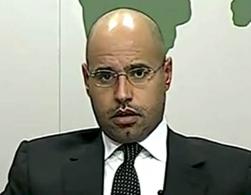
The warrant of arrest for Saif Al-Islam Gaddafi was issued on 27 June 2011. He is not in the Court's custody. Case also involved charges Muammar Gaddafi and Abdullah Al-Senussi in warrant issued on 27 June 2011. Case against Abdullah Al-Senussi was declared inadmissible on 11 October 2013. Case against Muammar Gaddafi was terminated on 22 November 2011, following his death.
Next steps: The case remains in the Pre-Trial stage, pending Saif Al-Islam Gaddafi's transfer to the seat of the Court in The Hague.

The warrant of arrest was issued under seal on 18 April 2013 and unsealed on 24 April 2017. On 7 September 2022, Pre-trial Chamber I terminated proceedings against Al-Tuhamy Mohamed Khaled, following the Prosecution’s Notification of the Death of Al-Tuhamy and request to withdraw arrest warrant, dated 2 August 2022 and annexing a copy of a death certificate issued by the Libyan authorities and an official translation.
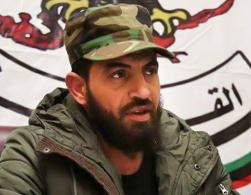
The first warrant of arrest was issued on 15 August 2017.
The second arrest warrant was issued on 4 July 2018.
On 15 June 2022, ICC Pre-trial Chamber I terminated proceedings against Mahmoud Mustafa Busayf Al-Werfalli, following the Prosecution’s notification of his passing and request to withdraw the warrants of arrest.
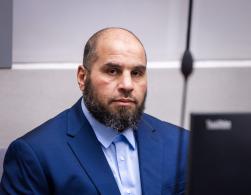
On 3 April 2025, the Office of the Prosecutor of the ICC applied for an arrest warrant against Mr El Hishri for crimes against humanity and war crimes. ICC Pre-Trial Chamber I (“the Chamber”) assessed the material submitted by the Prosecution and found reasonable grounds to believe that Mr Hishri is individually responsible for having committed directly himself, ordered or overseen crimes against humanity and war crimes, including murder, torture, rape and sexual violence, allegedly committed in Libya from February 2015 to early 2020.
The warrant of arrest against Mr El Hishri was issued under seal by the Chamber on 10 July 2025 and reclassified as “Public” on 31 July 2025. On 1 December 2025, Mr El Hishri was surrendered to the International Criminal Court after being arrested on 16 July 2025 by the authorities of the Federal Republic of Germany pursuant to the warrant of arrest.
The initial appearance of Mr El Hishri took place on 3 December 2025 before Pre-Trial Chamber I. The hearing was held in the presence of the Office of the Prosecutor and the Defence. Mr El Hishri was represented during the hearing by Mr Yasser Mohamed Ahmed Hassan.
The confirmation of charges hearing took place from 19 to 21 May 2026. Over the course of three days, the judges heard oral submissions from the Prosecutor, the Common Legal Representatives of the Victims and the Defence.
On 16 July 2026, Pre-Trial Chamber I unanimously confirmed all charges of crimes against humanity and war crimes brought by the Prosecutor against Khaled Mohamed Ali El Hishri and committed him to trial before a Trial Chamber.
On 20 July 2026, the ICC Presidency constituted Trial Chamber VII, which will be in charge of the case.
Next steps: Trial Chamber VII will hold status conferences, confer with the parties and participants in order to set the date of the trial and adopt the procedures necessary to facilitate the fair and expeditious conduct of the proceedings.
The Defence and the Prosecution are not automatically entitled to appeal this decision but they can request authorisation from the Pre-Trial Chamber to do so.
Questions and Answers on the confirmation of charges in the El Hishri case: English; Arabic