
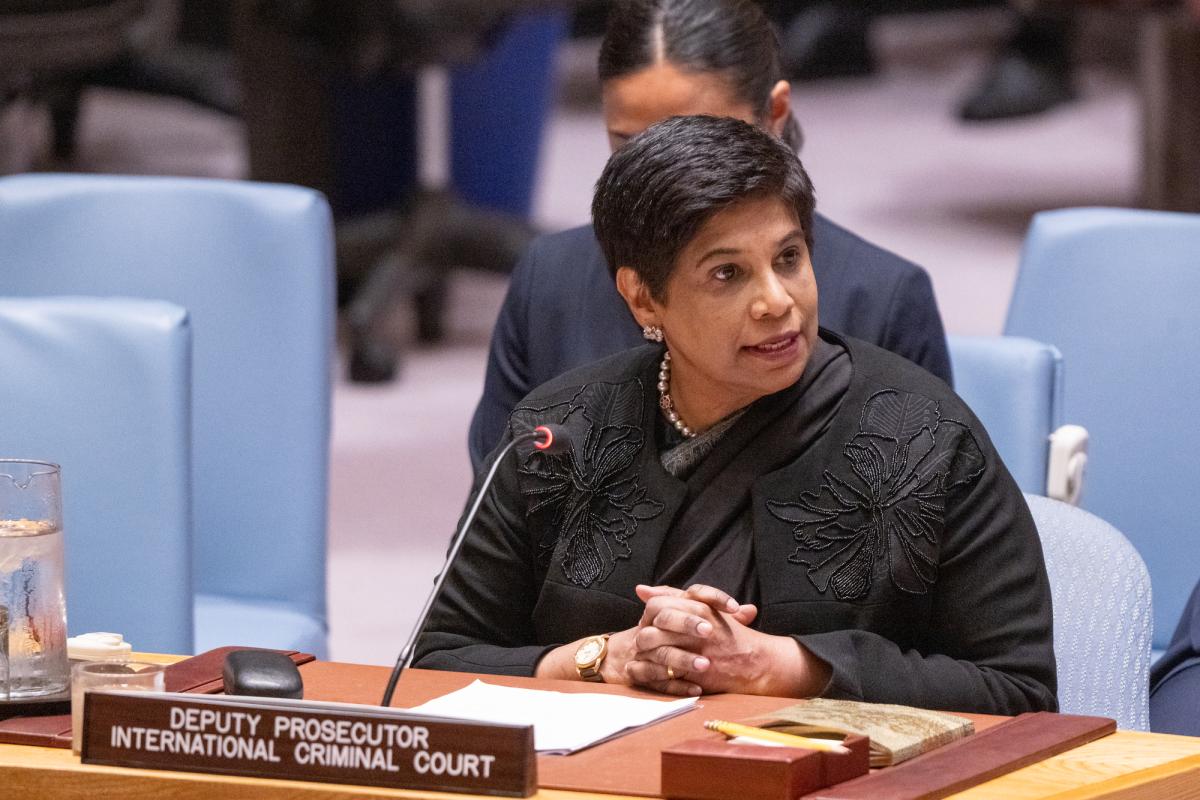
Statement of Deputy Prosecutor Nazhat Shameem Khan to the United Nations Security Council on the Situation in Darfur, pursuant to Resolution 1593 (2005)
Forty-first report: EN | FR | Arabic
Video: EN | FR | Arabic
Thank you, Mr President. And I thank you for this opportunity to address the Security Council today.
Please allow me to also express my thanks to His Excellency the Permanent Representative of Sudan to the United Nations for his attendance. I was pleased to hold a constructive and collaborative meeting with him yesterday, ahead of this briefing.
Mr President, Excellencies, we come together at a time when it can seem difficult to find appropriate words to describe the depth of suffering in Darfur.
The humanitarian position has reached an intolerable state.
Hospitals, humanitarian convoys, and other civilian objects are apparently being targeted. Famine is escalating, and humanitarian aid is not reaching those in dire need of it. People are being deprived of water and food. Rape and sexual violence are being weaponised. Abductions for ransom or to bolster the ranks of armed groups have become common practice. And yet we should not be under any illusion; things can still get worse.
Our Office has closely tracked reports, in recent weeks, of the current position in North Darfur, following attacks launched by the Rapid Support Forces and its affiliated groups on its capital, El Fasher, and the IDP camps of Zamzam and Abu Shouk.
Mr President, Excellencies, on the basis of our independent investigations, the position of our Office is clear: We have reasonable grounds to believe that war crimes and crimes against humanity have been and are continuing to be committed in Darfur.
This conclusion is grounded on the intensive activities that the Office has been undertaking in the last six months and in earlier reporting periods. In this work, we have relied on documentary, testimonial, and digital evidence collected and analysed by the Office.
In the last six months, these activities focused in particular on crimes committed in West Darfur, and they have included:
• Repeated field deployments to refugee camps in Chad to engage with victim communities and to conduct witness interviews. These field missions have provided crucial testimonial evidence for the Darfur Unified Team;
• Further engagement and strengthened cooperation, with the Sudanese Government authorities, including a recent deployment to Port Sudan, generating additional leads and identifying important witnesses relevant to current atrocities being committed in Darfur;
• Our activities have also included securing an enhanced cooperation framework with the United Nations Fact-Finding Mission in Sudan under the UN-ICC Relationship Agreement that will serve to accelerate cooperation in support of the investigations;
• And we have also deepened our engagement with civil society, with Darfuri diaspora and victims’ groups, including through the provision of support in enhancing their documentation efforts towards accountability in Darfur.
Based on these efforts and drawing on the over 7,000 evidence items collected to date, the Office of the Prosecutor remains focused on delivering concrete landmarks so as to respond to the legitimate and impassioned calls for justice heard from victims and survivors.
I wish to emphasise to this Council, to the victims we work so closely with, and indeed to all our partners that the situation in Darfur is of the utmost importance to the Office of the Prosecutor.
We will not be deterred until meaningful justice is delivered in a way that serves to vindicate the rights of those who are suffering and impacts the conduct of perpetrators on the ground.
Our previous efforts toward justice for Darfuri victims have led to the case against Mr Ali Muhammad Ali Abd-Al-Rahman, also known as Ali Kushayb. The upcoming decision in his trial, expected in the second half of this year, will, we hope, provide an important example of what can be achieved when we work together in this common effort.
And I wish to be clear to those on the ground in Darfur now, to those who are inflicting unimaginable atrocities on its population: They may feel a sense of impunity at this moment, as Ali Kushayb may have felt in the past, but we are working intensively to ensure that the Ali Kushayb trial represents only the first of many in relation to this situation at the International Criminal Court.
However, we also have a duty of confidentiality to the Court. I am not able to share more details of the nature of our progress or of specific outcomes hoped for. I can only assure you that the progress we have made is concrete, positive, and significant.
Mr President and Excellencies, I am particularly deeply troubled by the extensive victimisation and suffering of women and children in this conflict.
Our investigations will not be complete until we are able to hear and document before the Court the lived realities of Darfuri women today. We are giving gender-based crimes a focus and attention that requires a sensitivity to the taking of evidence from victims and survivors, and a clear understanding of the intersectionality of the discrimination that has led to such crimes.
We have worked for years on building our own capacity to hear these stories and to recognise the intersectionality of ethnicity, religion, gender, and age, impacts on the effectiveness of our evidence gathering and on the quality of the evidence that we are able to present to Court. We are building trust with these brave Darfuri women and girls who are able to tell us their stories. And their stories are consistent with the accounts of suffering by women and girls in successive United Nations reports, including those heard at the Human Rights Council.
There is an inescapable pattern of offending, targeting gender and ethnicity through rape and sexual violence which must be translated into evidence for the Court – and, indeed, the world – to hear.
These alleged crimes are being given particular priority by our Office as we proceed with focus in our investigative work.
With the support of our dedicated Gender and Children’s Unit, we are undertaking a range of targeted activities aimed at increasing the visibility and the results delivered in relation to crimes that continue to be underreported and insufficiently recognised.
In this reporting period, this has included:
• Hosting dedicated discussions with affected communities in Chad to address concerns raised regarding the possible provision of testimony of witnesses and victims;
• Allocating additional specialised expertise to the Darfur Unified Team in the field of gender-based crimes;
• Identifying new leads through partner organisations in relation to victims or witnesses of gender-based crimes; and
• Developing outreach activities with Darfuri civil society organisations in partnership with the Court’s Registry.
These activities to be implemented in the coming reporting period will serve to strengthen collective capacity in relation to documentation of gender-based crimes in Darfur.
But action to protect and support the women of Darfur can only be delivered through collective work. I call upon all our partners and this Council for us to work more closely together to assure there is no gap in our efforts to hold perpetrators of gender-based crimes accountable for their crimes.
To galvanise our common action in the coming reporting period, I will be working to bring together all stakeholders to identify how we can deliver more for women and girls in Darfur.
In this spirit of partnership, I am grateful for the productive discussion I held today with Under-Secretary-General Pramila Patten, Special Representative to the Secretary-General on Sexual Violence in Conflict, on how we can collaborate in deeper, more impactful ways to deliver accountability for these crimes.
Mr President, Excellencies, I am also pleased to report further grounds for continued optimism with respect to cooperation from the Government of Sudan.
In this reporting period, our Office has held further engagements with the Sudan Government authorities, in particular through a visit to Port Sudan facilitated by the Government of Sudan, which allowed for the identification and engagement with potential additional witness. A further visit is planned for the immediate coming period.
I wish to recognise the efforts made in particular by the committee established by the Government of Sudan for cooperation with the Office of the Prosecutor. This has made a tangible, positive impact on our collaboration. We look forward to further consolidating and expanding this cooperation in the next six months in line with the terms of Resolution 1593.
And I wish to be clear on a key priority in this respect: We must work together with seriousness and focus to secure the arrest of those individuals subject to ICC arrest warrants presently in Sudan: Omar Hassan Ahmad Al Bashir, Ahmad Harun, and Abdel Raheem Muhammad Hussein.
Transferring Mr Harun now would carry exceptional weight, given that the crimes that he is accused of are closely linked to those currently before the Court in Mr Abd-Al-Rahman’s trial. In the current context of the extensive allegations of Rome Statute violations in Darfur, such action would send a strong signal and show the commitment of the Government of Sudan to ensuring accountability.
We look forward to continuing constructive discussions on all cooperation matters with the Government of Sudan.
Mr President, Excellencies, as I have outlined in the last six months, there has been continued and significant progress in our work in Darfur. The progress that we make, the work that we do can never be sufficient, relative to the degree and scale of the suffering that we know is occurring in Darfur now. And many of the actions that we do take are not visible to our partners. However, I wish to reassure Darfuri communities in Sudan and globally that with their partnership, we are accelerating our work to deliver justice at the ICC, in the courtroom, for the crimes presently being committed.
And this progress has been made in the face of significant challenges.
Cooperation received from States has faced hurdles. The resources of the Office are critically low, relative to the scale of allegations we are tasked to investigate. And we have experienced hostility and obstruction in our work and our mandate. We need your support now more than ever before.
I would therefore like to conclude by asking again: What is our common ground? Every single State here is appalled by what is happening in Darfur. You are all seeking to find ways to slow the current tailspin, and change this dynamic of increased and escalated suffering for the Darfuri people. The work of our Office – the work of the ICC – can and will form an important part of our collective response to this crisis.
In our report, I have outlined how, I think, we can work more effectively together, how we can move more quickly to the moment of vindication for victims through arrest and trial of those currently spreading fear and suffering in Darfur.
Let us take this as a blueprint for next steps. With your support we can not only deliver much-needed justice for what is taking place, but also, critically, prevent the seemingly never-ending cycle of violence fuelled by a deep sense of impunity amongst those inflicting pain as we speak.
If we can come together, if we can agree that such suffering needs the support of all those who are able to provide it, I believe that the present crisis can ultimately demonstrate how justice, delivered collectively, can set the foundations for the reduction of suffering, and the beginning of work towards peace. I ask for such a collective response and resolve.
I thank you, Mr President.
التقرير الحادي والأربعون: إنكليزي | فرنسي | عربي
بالصوت والصورة: إنكليزي | فرنسي
شكرا لكم، سيدي الرئيس. أشكركم على هذه الفرصة لمخاطبة مجلس الأمن اليوم.
اسمحوا لي أيضا أن أعرب عن امتناني لسعادة الممثل الدائم للسودان لدى الأمم المتحدة على حضوره. لقد سررتُ بعقد اجتماع بنّاء تسوده روح التعاون معه أمس، قبل هذه الإحاطة.
السيد الرئيس، أصحاب السعادة، نجتمع في وقت قد يبدو فيه من الصعب إيجاد كلماتٍ مناسبة لوصف عمق المعاناة في دارفور.
لقد وصل الوضع الإنساني إلى حالة لا تُطاق.
يبدو أن المستشفيات والقوافل الإنسانية وغيرهما من الأهداف المدنية تُستهدف. المجاعة تتفاقم، والمساعدات الإنسانية لا تصل إلى من هم في أمسّ الحاجة إليها. يُحرم الناس من الماء والغذاء. ويُستخدَم الاغتصاب والعنف الجنسي كسلاح. أصبحت عمليات الاختطاف طلبا للفدية أو إسنادا لصفوف الجماعات المسلحة ممارسةً شائعة. ومع ذلك، يجب ألا نتوهم؛ فالأمور قد تسوء أكثر.
وقد تابع مكتبنا عن كثب، في الأسابيع الأخيرة، التقارير المتعلقة بالوضع الراهن في شمال دارفور، عقب الهجمات التي شنتها قوات الدعم السريع والجماعات التابعة لها على عاصمتها الفاشر، ومخيمي زمزم وأبو شوك للمشردين داخليا.
السيد الرئيس، أصحاب السعادة، بناء على تحقيقاتنا المستقلة، فإن موقف مكتبنا واضح: لدينا أسباب معقولة للاعتقاد بأن جرائم حرب وجرائم ضد الإنسانية قد ارتُكبت وما زالت تُرتكب في دارفور.
ويستند هذا الاستنتاج إلى الأنشطة المكثفة التي قام بها المكتب خلال الأشهر الستة الماضية وفي الفترات التي شملتها التقارير السابقة. وقد اعتمدنا في هذا العمل على الأدلة الوثائقية والرقمية والشهادات التي جمعها المكتب وحللها.
وفي الأشهر الستة الماضية، ركزت هذه الأنشطة تركيزا خاصا على الجرائم المرتكبة في غرب دارفور، وشملت:
• عمليات نشر ميدانية متكررة في مخيمات اللاجئين في تشاد للتواصل مع مجتمعات المجني عليهم وإجراء مقابلات مع الشهود. وقد وفرت هذه البعثات الميدانية لفريق دارفور الموحد أدلةً حاسمة من شهادات الشهود.
• تعزيز المشاركة والتعاون مع سلطات الحكومة السودانية، بما في ذلك نشر فريق في بورتسودان مؤخرا، مما أدى إلى الحصول على قرائن إضافية وتحديد شهود مهمين على صلة بالفظائع الحالية المرتكبة في دارفور؛
• شملت أنشطتنا أيضا تأمين إطار تعاون مُعزز مع بعثة الأمم المتحدة لتقصي الحقائق في السودان بموجب اتفاقية العلاقة بين الأمم المتحدة والمحكمة الجنائية الدولية، مما سيُسهم في تسريع التعاون دعما للتحقيقات؛
• وعززنا أيضا مشاركتنا مع المجتمع المدني، ومع شتات دارفور ومجموعات المجني عليهم، بما في ذلك من خلال تقديم الدعم لتعزيز جهودهم التوثيقية الرامية إلى تحقيق المساءلة في دارفور.
وبناء على هذه الجهود، وبالاستفادة من الأدلة التي جُمعت حتى الآن، والتي يزيد عددها على 7000 دليل، لا يزال مكتب المدعي العام يُركز على وضع معالم ملموسة للاستجابة للدعوات المشروعة والمفعمة بالحماسة لتحقيق العدالة التي أطلقها المجني عليهم والناجون.
وأود أن أؤكد لهذا المجلس، وللمجني عليهم الذين نعمل معهم عن كثب، بل ولجميع شركائنا، أن الحالة في دارفور تكتسي أهمية قصوى لدى مكتب المدعي العام.
ولن يثنينا شيء حتى تتحقق العدالة الناجزة، بما يصون حقوق المتضررين ويؤثر على سلوك الجناة على أرض الواقع.
وقد أفضت جهودنا السابقة لتحقيق العدالة للمجني عليهم في دارفور إلى رفع الدعوى المقامة على السيد علي محمد علي عبد الرحمن، المعروف أيضا باسم علي كوشيب. ونأمل أن يكون القرار المرتقب في محاكمته، والمتوقع صدوره في النصف الثاني من هذا العام، مثالا هاما على ما يمكن تحقيقه عندما نعمل معا في إطار هذا الجهد المشترك.
وأود أن أوجه رسالة واضحة لمن هم في الميدان في دارفور الآن، ولمن يرتكبون فظائع لا يمكن تصورها ضد سكانها: قد يشعرون بالإفلات من العقاب في هذه اللحظة، كما شعر علي كوشيب من قبل، لكننا نكثف عملنا لكيلا تكون محاكمة علي كوشيب سوى فاتحة لمحاكمات كثيرة فيما يتعلق بهذه الحالة في المحكمة الجنائية الدولية.
ومع ذلك، من واجبنا أيضا الحفاظ على السرية تجاه المحكمة. ولا يمكنني أن أعرض المزيد من التفاصيل حول طبيعة تقدمنا أو النتائج المحددة المرجوة. ولا يسعني إلا أن أؤكد لكم أن التقدم الذي أحرزناه ملموس وإيجابي وهام.
السيد الرئيس وأصحاب السعادة، أشعر بقلق بالغ، لا سيما لما تتعرض له النساء والأطفال من الإيذاء والمعاناة الواسعة النطاق في هذا الصراع.
ولن تكتمل تحقيقاتنا حتى نتمكن في المحكمة من سماع الحقائق التي تعايشها نساء دارفور اليوم وتوثيقها. إننا نولي الجرائم القائمة على النوع الاجتماعي اهتماما بالغا يتطلب التعامل بحساسية في جمع الأدلة من المجني عليهم والناجين، وفهما واضحا لتداخل أشكال التمييز الذي أدى إلى هذه الجرائم.
لقد عملنا لسنوات على بناء قدرتنا على سماع هذه القصص، وإدراك تداخل العرق والدين والجنس والعمر، وتأثيره على فعالية جمع الأدلة التي يمكننا تقديمها للمحكمة وجودتها. إننا نبني الثقة مع هؤلاء النساء والفتيات الدارفوريات الشجاعات القادرات على سرد قصصهن لنا. وتتوافق قصصهن مع روايات معاناة النساء والفتيات في تقارير الأمم المتحدة المتتالية، بما في ذلك تلك التي عُرضت في مجلس حقوق الإنسان.
وثمة نمطٌ من الإيذاء لا يمكن التغاضي عنه، يستهدف النوع الاجتماعي والعرق من خلال الاغتصاب والعنف الجنسي، وهو ما يجب ترجمته إلى أدلة تقدم للمحكمة – بل وللعالم أجمع.
ويولي مكتبنا أولوية خاصة لهذه الجرائم المـُدّعى بارتكابها بينما نواصل التركيز على عملنا التحقيقي.
وبدعم من وحدتنا المخصصة لشؤون النوع الاجتماعي والطفل، ننفذ مجموعة من الأنشطة الموجهة التي تهدف إلى زيادة الوعي وما نحققه من نتائج فيما يتعلق بالجرائم التي لا يزال الناس يحجمون عن الإبلاغ عنها ولم تحظ بالاعتراف الملائم.
وقد شمل ذلك، خلال الفترة المشمولة بهذا التقرير، ما يلي:
• استضافة مناقشات مخصصة مع المجتمعات المتضررة في تشاد لمعالجة المخاوف المثارة بشأن إمكانية تقديم شهادات الشهود والمجني عليهم؛
• تخصيص خبرات متخصصة إضافية لفريق دارفور الموحد في مجال الجرائم القائمة على النوع الاجتماعي؛
• تحديد قرائن جديدة من خلال المنظمات الشريكة فيما يتعلق بالمجني عليهم في الجرائم القائمة على النوع الاجتماعي أو الشهود عليها؛
• تطوير أنشطة تواصل مع منظمات المجتمع المدني في دارفور بالشراكة مع قلم المحكمة.
وستساهم هذه الأنشطة، المقرر تنفيذها خلال الفترة التي سيشملها التقرير القادم، في تعزيز القدرة الجماعية على توثيق الجرائم القائمة على النوع الاجتماعي في دارفور.
ولكن العمل على حماية نساء دارفور ودعمهن لا يمكن أن يتحقق إلا من خلال العمل الجماعي. وأدعو كل شركائنا وهذا المجلس إلى أن نعمل معا بشكل أوثق لضمان عدم وجود أي ثغرات في جهودنا الرامية إلى محاسبة مرتكبي الجرائم القائمة على النوع الاجتماعي على جرائمهم.
ولتحفيز عملنا المشترك في الفترة التي سيشملها التقرير القادم، سأعمل على جمع كل أصحاب المصلحة لتحديد طريقة تقديم المزيد من الدعم للنساء والفتيات في دارفور.
وانطلاقا من روح الشراكة هذه، أُعرب عن امتناني للمناقشة المثمرة التي أجريتُها اليوم مع وكيلة الأمين العام براميلا باتن، الممثلة الخاصة للأمين العام المعنية بالعنف الجنسي في حالات النزاع، حول طريقة تعاوننا بسبل أعمق وأكثر تأثيرا لتحقيق المساءلة عن هذه الجرائم.
السيد الرئيس، أصحاب السعادة، يسرني أيضا أن أبلغكم بأسباب أخرى تدعو لاستمرار التفاؤل فيما يتعلق بتعاون حكومة السودان.
خلال الفترة المشمولة بهذا التقرير، أجرى مكتبنا المزيد من اللقاءات مع سلطات الحكومة السودانية، ولا سيما من خلال زيارة إلى بورتسودان بتسهيل من حكومة السودان، أتاحت التعرف على شهود إضافيين محتملين والتواصل معهم. ومن المقرر القيام بزيارة أخرى في الفترة المقبلة.
وأودّ أن أُشيد بالجهود المبذولة، ولا سيما من جانب اللجنة التي أنشأتها حكومة السودان، للتعاون مع مكتب المدعي العام. وقد كان لذلك أثر إيجابي ملموس على تعاوننا. ونتطلع إلى مواصلة تعزيز هذا التعاون وتوسيعه خلال الأشهر الستة المقبلة، بما يتماشى مع أحكام القرار 1593.
وأودّ أن أوضح مسألة ذات أولوية رئيسية في هذا الصدد: يجب أن نعمل معا بجدية وتركيز لضمان القبض على الأفراد الذين أصدرت المحكمة الجنائية الدولية أوامر بالقبض عليهم والموجودين حاليا في السودان، وهم: عمر حسن أحمد البشير، وأحمد هارون، وعبد الرحيم محمد حسين.
وسيكون لتسليم السيد هارون الآن وزن استثنائي، نظرا لارتباط الجرائم المتهم بها ارتباطا وثيقا بتلك التي تنظرها المحكمة حاليا في محاكمة السيد عبد الرحمن. وفي ظلّ الادعاءات واسعة النطاق بارتكاب انتهاكات واردة في نظام روما الأساسي في دارفور، فإن اتخاذ هذا الإجراء سيُعدّ بمثابة رسالة قويةً ويُظهر التزام حكومة السودان بضمان المساءلة.
ونتطلع إلى مواصلة المناقشات البناءة مع حكومة السودان بشأن جميع مسائل التعاون.
السيد الرئيس، أصحاب السعادة، كما أوضحتُ خلال الأشهر الستة الماضية، فقد أحرزنا تقدما مستمرا وملحوظا في عملنا في دارفور. والتقدم الذي نحرزه، والعمل الذي نقوم به، لا يمكن أن يكفي أبدا مقارنةً بدرجة المعاناة وحجمها التي نعلم أنها تحدث في دارفور حاليا. وثمة العديد من الإجراءات التي نتخذها ولا يدركها شركاؤنا. ومع ذلك، أودّ أن أطمئن مجتمعات دارفور في السودان وفي كل أنحاء العالم بأننا، بفضل شراكتهم، نُسرّع عملنا لتحقيق العدالة في المحكمة الجنائية الدولية، في قاعة المحكمة، بشأن الجرائم التي تُرتكب حاليا.
وقد أُحرز هذا التقدم في ظلّ تحديات كبيرة.
وقد واجهت الدول عقبات في سبيل تعاونها معنا. فموارد المكتب منخفضة للغاية، مقارنةً بحجم الادعاءات التي كُلّفنا بالتحقيق فيها. وواجهنا عداء وعرقلة في عملنا وولايتنا. ونحن بحاجة إلى دعمكم الآن أكثر من أي وقت مضى.
لذا، أودّ أن أختتم كلمتي بأن أسألكم من جديد: ما هي قواسمنا المشتركة؟ إن كل دولة هنا يفزعها ما يحدث في دارفور. وأنتم جميعا تسعون لإيجاد سبل لإبطاء التدهور الحالي، وتغيير ديناميكية المعاناة المتزايدة والمتصاعدة لشعب دارفور. إن عمل مكتبنا –عمل المحكمة الجنائية الدولية– يمكن أن يُشكّل، بل سيُشكّل، جزءا هاما من استجابتنا الجماعية لهذه الأزمة.
وفي تقريرنا، بيّنتُ كيف يُمكننا، في رأيي، العمل معا بفعالية أكبر، وكيف يُمكننا الانتقال بسرعة أكبر إلى لحظة إنصاف المجني عليهم من خلال القبض على من ينشرون الخوف والمعاناة في دارفور ومحاكمتهم.
فلنجعل من هذا نموذجا نسترشد به في خطواتنا التالية. وبدعمكم، يُمكننا تحقيق العدالة التي نحن في أمسّ الحاجة إليها بسبب ما يحدث، ليس هذا فحسب، بل والأهم من ذلك أن نمنع دوامة العنف التي تبدو وكأنها لا نهاية لها، والتي يُغذّيها شعورٌ بالإفلات من العقاب متجذر عند أولئك الذين يُلحقون الألم بالناس في هذه الأثناء.
وإذا استطعنا أن نتكاتف، وإذا استطعنا أن نتفق على أن هذه المعاناة تستوجب الدعم من كل مستطيع، فإنني أعتقد أن الأزمة الحالية يمكن أن تُظهر في نهاية المطاف كيف يمكن للعدالة، إذا ما تحققت بجهد جماعي، أن تُرسي أسس الحد من المعاناة، وتأذن ببدء العمل نحو السلام. وإنني لأدعو لمثل هذه الاستجابة الجماعية والعزم المشترك.
شكرا لكم، سيدي الرئيس