
Statement of the ASP President following the conclusion of disciplinary proceedings involving Prosecutor Karim Khan
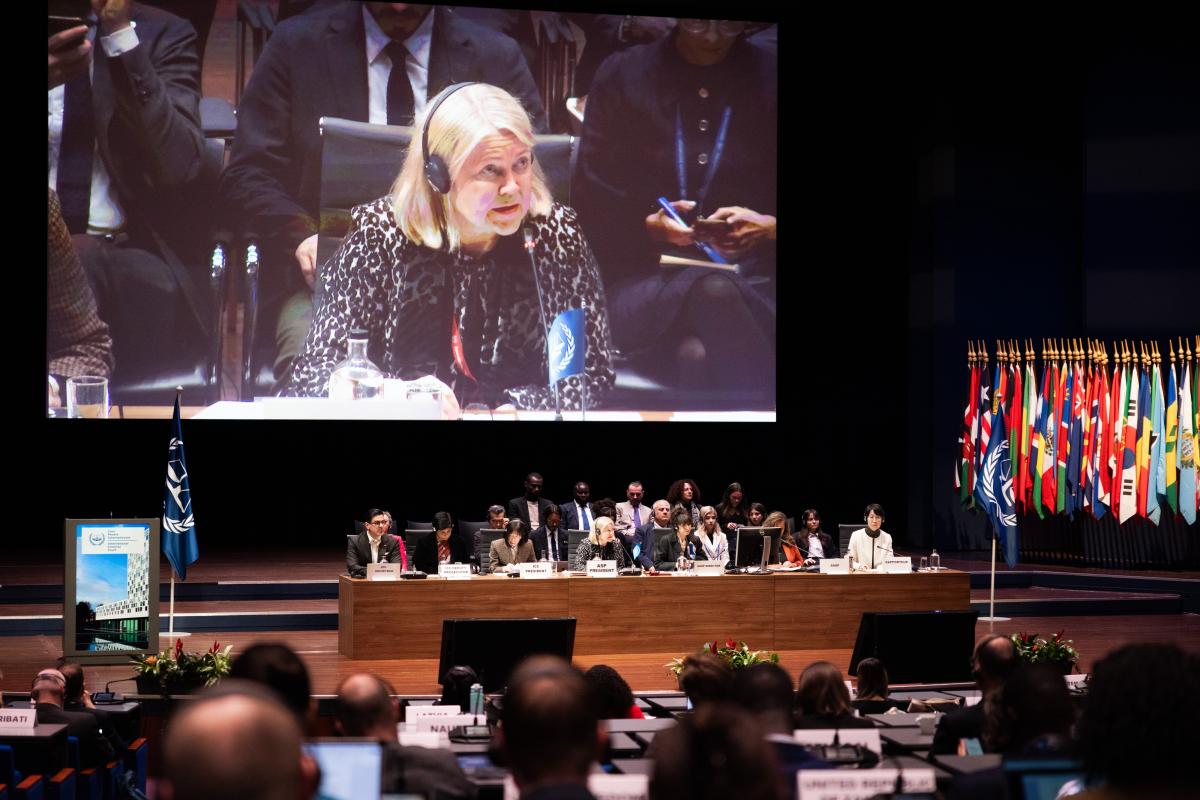
The President of the Assembly of States Parties (ASP) wishes to address recent developments concerning the completion of disciplinary proceedings involving Prosecutor Karim Khan following the 24 July 2026 decision of the Assembly of States. The Assembly by a majority of 82 States Parties found that Mr. Karim Khan committed serious misconduct and serious breach of duty and removed him from office under article 46 of the Rome Statute.
The President underscores that these disciplinary proceedings are not related to the conduct of investigations or proceedings before the Court and are without prejudice to the independence of the International Criminal Court.
In reaching its decision, the Bureau and the Assembly have fully respected the due process rights of the Prosecutor and accorded him considerable flexibility by granting additional protections to those specified under the legal framework.
Under the applicable legal framework, investigations into allegations of misconduct against elected officials and subsequent disciplinary proceedings before the Bureau and the Assembly are confidential in nature. This confidentiality serves a fundamental purpose: it safeguards the integrity of ongoing proceedings and protects the rights of all individuals involved, including the right of the subject to the protection of his or her reputation prior to a final determination. It also aims to ensure that disciplinary processes are conducted in a manner that upholds the dignity and privacy of all persons concerned.
Throughout the proceedings, the Presidency and the Bureau have remained bound by their obligation of confidentiality and have exercised restraint in responding to media reports or public speculation. Now that the disciplinary process has concluded before the Assembly, the President considers it appropriate to provide certain clarifications regarding the applicable procedures and decisions taken within the established legal framework.
First, the investigation conducted by the Office of Internal Oversight Services (OIOS) found that there was evidence supporting the allegations of misconduct made by the victim and two other affected individuals.
Second, an ad hoc Panel of judicial experts was established by the Bureau in the context of a recommendation arising from the 2020 Independent Expert Review (IER), which was partially endorsed by the Assembly of States Parties, calling for the establishment of such panels to assist with legal characterization of investigative reports issued by investigators.
Third, the use of ad hoc Panels was subsequently adopted by the Assembly at its twenty-fourth session, in resolution ICC-ASP/24/Res.2, and forms part of the Court’s legal framework.
Fourth, the mandate of the ad hoc Panel is advisory in nature. The Bureau, as the competent decision-making authority, retained responsibility for making determinations on the allegations.
Fifth, the report of the ad hoc Panel did not exonerate Prosecutor Khan. Rather, the report indicated that the Panel’s mandate did not permit additional investigative steps or independent fact-finding, thereby limiting its ability to draw conclusions on the evidentiary record established by OIOS.
Sixth, unlike the Panel, the Bureau was not subject to limitations precluding it from drawing factual conclusions from the evidentiary record.
Seventh, in reaching its decision, the Bureau was guided by the Panel’s legal assessment of the evidentiary record established by OIOS, and applied the applicable standard of proof required for disciplinary determinations.
Finally, the Bureau’s decision that Prosecutor Khan engaged in serious misconduct and serious breach of duty was based on its assessment of the OIOS report, the underlying evidentiary material, and the advice of the ad hoc Panel, all within the legal framework governing allegations of misconduct against elected officials.
With the conclusion of the disciplinary process and the decision of the Assembly of States Parties, the matter is closed. The President reiterates her expectation that due respect be afforded to the privacy and dignity of all individuals involved.
In closing, the President expresses her deep appreciation to the Assembly of States Parties for their diligent consideration of this difficult matter and for the spirit of unity shown in upholding the integrity of the Court. She further acknowledges the dedication of the Court’s staff who have continued to work tirelessly in the implementation of the Court’s critical mandate during this prolonged period of uncertainty. While the Court may have more challenges ahead, the Assembly’s navigation of this difficult matter, coupled with the dedication of the Court’s staff and elected officials has demonstrated the resolve to continue to support the Court through difficult times and to ensure that it can discharge its critical mandate in the interests of the international community as a whole and victims of atrocity crimes the world over.
The Assembly of States Parties is the management oversight and legislative body of the International Criminal Court. It is comprised of representatives of States that have ratified or acceded to the Rome Statute. The President of the Assembly is H.E. Ms. Päivi Kaukoranta (Finland).
X: @PASPKaukoranta
For further information on the Assembly of States Parties, please e-mail [email protected]
La Presidenta de la Asamblea de los Estados Partes (AEP) desea referirse a los acontecimientos recientes relacionados con la conclusión del procedimiento disciplinario seguido contra el Fiscal Karim Khan tras la decisión adoptada por la Asamblea de los Estados Partes el 24 de julio de 2026. La Asamblea, por mayoría de 82 Estados Partes, determinó que el Sr. Karim Khan incurrió en falta grave e incumplimiento grave de sus deberes y lo destituyó de su cargo en virtud del artículo 46 del Estatuto de Roma.
La Presidenta subraya que este procedimiento disciplinario no guarda relación con la conducción de las investigaciones o de los procedimientos ante la Corte y se entiende sin perjuicio de la independencia de la Corte Penal Internacional.
Al adoptar su decisión, tanto la Mesa como la Asamblea respetaron plenamente los derechos del Fiscal al debido proceso y le otorgaron una flexibilidad considerable al concederle salvaguardias adicionales a las previstas en el marco jurídico aplicable.
De conformidad con el marco jurídico aplicable, las investigaciones sobre denuncias de conducta indebida contra titulares de cargos electivos y las subsiguientes actuaciones disciplinarias ante la Mesa y la Asamblea tienen carácter confidencial. Esta confidencialidad responde a un propósito fundamental: salvaguardar la integridad de las actuaciones en curso y proteger los derechos de todas las personas involucradas, incluido el derecho de la persona objeto de las actuaciones a la protección de su reputación hasta que se adopte una decisión definitiva. Asimismo, tiene por objeto garantizar que los procedimientos disciplinarios se lleven a cabo de manera que se preserve la dignidad y la privacidad de todas las personas interesadas.
Durante todo el procedimiento, la Presidencia y la Mesa han estado sujetas a su obligación de confidencialidad y han ejercido la debida cautela al responder a informaciones difundidas por los medios de comunicación o a especulaciones públicas. Ahora que el procedimiento disciplinario ha concluido ante la Asamblea, la Presidenta considera oportuno proporcionar determinadas aclaraciones sobre los procedimientos aplicables y las decisiones adoptadas en el marco jurídico establecido.
En primer lugar, la investigación llevada a cabo por la Oficina de Servicios de Supervisión Interna (OSSI) determinó que existían elementos de prueba que respaldaban las alegaciones de conducta indebida formuladas por la víctima y por otras dos personas afectadas.
En segundo lugar, la Mesa estableció un Grupo Especial ad hoc de expertos judiciales en el contexto de una recomendación derivada del Examen Independiente por Expertos de 2020, que fue respaldada parcialmente por la Asamblea de los Estados Partes y que instaba al establecimiento de dichos grupos para prestar asistencia en la calificación jurídica de los informes de investigación elaborados por los investigadores.
En tercer lugar, la utilización de Grupos Especiales ad hoc fue posteriormente adoptada por la Asamblea en su vigésimo cuarto período de sesiones, mediante la resolución ICC-ASP/24/Res.2, y forma parte del marco jurídico de la Corte.
En cuarto lugar, el mandato del Grupo Especial ad hoc tiene carácter consultivo. La Mesa, en su calidad de autoridad competente para la adopción de decisiones, conservó la responsabilidad de formular determinaciones respecto de las alegaciones.
En quinto lugar, el informe del Grupo Especial ad hoc no exoneró al Fiscal Khan. Por el contrario, el informe indicó que el mandato del Grupo no le permitía adoptar medidas de investigación adicionales ni realizar una determinación independiente de los hechos, limitando así su capacidad para extraer conclusiones sobre el acervo probatorio establecido por la OSSI.
En sexto lugar, a diferencia del Grupo Especial, la Mesa no estaba sujeta a limitaciones que le impidieran extraer conclusiones de hecho a partir del acervo probatorio.
En séptimo lugar, al adoptar su decisión, la Mesa tuvo en cuenta la evaluación jurídica del acervo probatorio establecido por la OSSI realizada por el Grupo Especial y aplicó el criterio de prueba aplicable requerido para la adopción de determinaciones disciplinarias.
Por último, la decisión de la Mesa de que el Fiscal Khan había incurrido en una conducta indebida grave y en un incumplimiento grave de los deberes del cargo se basó en su evaluación del informe de la OSSI, del material probatorio subyacente y del asesoramiento del Grupo Especial ad hoc, todo ello dentro del marco jurídico que regula las denuncias de conducta indebida contra titulares de cargos electivos.
Con la conclusión del procedimiento disciplinario y la decisión de la Asamblea de los Estados Partes, el asunto queda cerrado. La Presidenta reitera su expectativa de que se otorgue el debido respeto a la privacidad y la dignidad de todas las personas involucradas.
Para concluir, la Presidenta expresa su profundo agradecimiento a la Asamblea de los Estados Partes por el esmero con que examinó este difícil asunto y por el espíritu de unidad demostrado en la defensa de la integridad de la Corte. Asimismo, reconoce la dedicación del personal de la Corte, que ha seguido trabajando incansablemente para cumplir el mandato fundamental de la Corte durante este prolongado período de incertidumbre.
Si bien es posible que la Corte deba afrontar nuevos desafíos en el futuro, la forma en que la Asamblea ha gestionado este difícil asunto, junto con la dedicación del personal de la Corte y de sus funcionarios elegidos, ha puesto de manifiesto la firme determinación de seguir apoyando a la Corte en tiempos difíciles y de garantizar que pueda cumplir su mandato fundamental en beneficio de la comunidad internacional en su conjunto y de las víctimas de crímenes atroces en todo el mundo.
La Asamblea de los Estados Partes es el órgano de supervisión administrativa y legislativa de la CPI. Está compuesta por representantes de los Estados que han ratificado o se han adherido al Estatuto de Roma. La Presidencia de la Asamblea está actualmente compuesta por la Presidenta, Excma. Sra. Päivi Kaukoranta (Finlandia).
X: @PASPKaukoranta
For further information on the Assembly of States Parties, please e-mail [email protected]