
The Scientific Advisory Board of the Office of the Prosecutor holds its 6th annual meeting
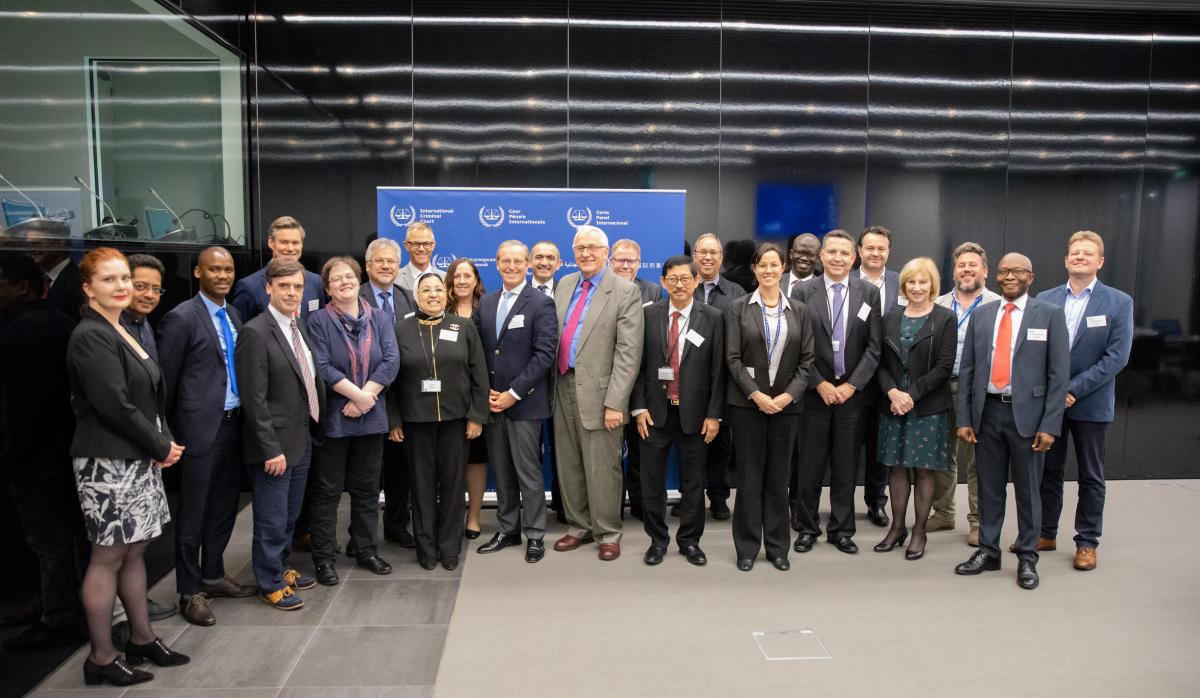
On 20 and 21 June 2019, the Office of the Prosecutor (the "Office") of the International Criminal Court (the "ICC or the "Court") held its 6th annual meeting of the Scientific Advisory Board (the "Board") of the Office, at the seat of the Court in The Hague, The Netherlands.
The Board provides recommendations to the Prosecutor on developments in technologies and scientific methods and procedures that can further reinforce the Office's capabilities in the collection, management and analysis of scientific evidence relating to the investigation and prosecution of crimes listed in the Rome Statute. Adapting the Office's investigative and prosecutorial capabilities and networks to the rapidly-changing scientific and technological environment in which it operates remains an important consideration for the Office.
On behalf of the ICC Prosecutor, the Deputy Prosecutor, James Stewart, expressed the appreciation of the Office for the contribution and commitment of Board members. He highlighted the instrumental role of the Board in guiding the Office in defining best practices for forensic evidence and in reviewing standards. The Deputy Prosecutor expressed the wish to further harness scientific and technological developments through the Board.
In her annual report to the Board, the Head of the Office's Forensic Science Section and Executive Secretary of the Board, Ms Sarah Donnelly, reported on the activities of the Office. She highlighted the work of her Section and the continuous progress made. She emphasised that the combined expertise of the Section's staff places it in a position to lead scientific international research and development. She further expressed the commitment of the Office to continue to work in partnership with the Board. In his presentation to the Board, the Director of the Prosecution Division, Mr Fabricio Guariglia, echoed these sentiments, emphasizing the valuable contribution of the Board to the Office's work.
Presenting the annual report of the Chair of the Board, Professor Duarte Nuno Vieira thanked the Office for organising the annual gathering, as well as representatives of organisations which are members of the Board, for their participation. Professor Vieira emphasised the importance of cooperation between the organisations represented on the Board. He highlighted that the review of Standard Operating Procedures is vital in support of the operational forensic investigative activities of the Office of the Prosecutor. He further stressed the need to fully utilise the expertise and capacity of the Board. .
In his closing remarks, the Deputy Prosecutor, Mr James Stewart, reiterated the Prosecutor's gratitude to the Board for their accomplishments to date and the importance of scientific evidence to the advancement of the goals of the Rome Statute. He further stressed the importance of maintaining standards of the highest quality. "The standards we apply to ourselves may serve as an example to national authorities striving to render justice for the victims of atrocity crimes", said the Deputy Prosecutor. "The Scientific Advisory Board has thus become part of a complex interrelated system of international criminal justice," he added.
In addition to the review of Standard Operating Procedures, other issues discussed during the annual meeting included expansion of the Board's scientific support to the Office of the Prosecutor and capacity in priority areas.
The following organisations were represented at the 6th annual meeting of the Board:
Academia Iberoamericana de Criminalística y Estudios Forenses;
Arab Union of Forensics and Toxicology;
African Society of Forensic Medicine;
Australian and New Zealand Forensic Science Society;
European Council of Legal Medicine;
EUROPOL, European Cybercrime Centre (EC3);
European Network of Forensic Science Institutes;
Ibero-American Network of Forensic Medicine and Forensic Science Institutions;
Indo-Pacific Association of Law, Medicine and Science;
International Academy of Legal Medicine;
International Association of Forensic Sciences;
International Forensic Strategic Alliance;
INTERPOL International Forensic Science Managers Symposium;
Mediterranean Academy of Forensic Sciences;
Southern Africa Regional Forensic Science Network;
United Nations Institute for Training and Research's Operational Satellite Applications Programme (UNOSAT);
World Association for Medical Law, and
Observer: Scientific Advisory Board of the Organisation for the Prohibition of Chemical Weapons.
The Office of the Prosecutor of the ICC conducts independent and impartial preliminary examinations, investigations and prosecutions of the crime of genocide, crimes against humanity, war crimes and the crime of aggression. Since 2003, the Office has been conducting investigations in multiple situations within the ICC's jurisdiction, namely in Uganda; the Democratic Republic of the Congo; Darfur, Sudan; the Central African Republic (two distinct situations); Kenya; Libya; Côte d'Ivoire; Mali; Georgia and Burundi. The Office is also currently conducting preliminary examinations relating to the situations in Bangladesh/Myanmar; Colombia; Guinea; Iraq/UK; Palestine; the Philippines; Nigeria; Ukraine, and Venezuela.