
Spain reaffirms commitment to justice and victims through a new voluntary contribution to the Trust Fund for Victims
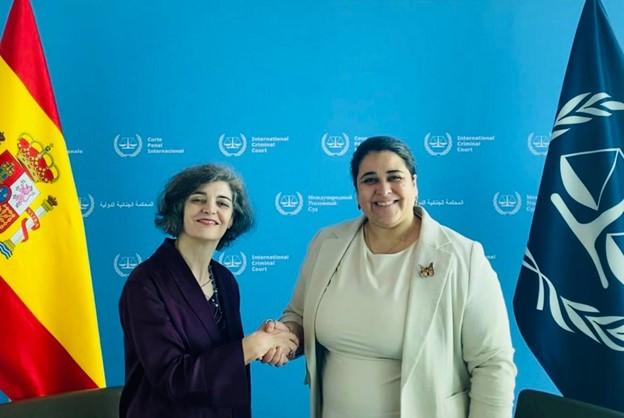
The Kingdom of Spain, a State Party to the International Criminal Court (ICC) since 2000, has made a voluntary contribution of EUR 40,000 to the Trust Fund for Victims (TFV), reaffirming its commitment to international justice and the rights of victims of crimes under the Rome Statute.
This unrestricted contribution from the Kingdom of Spain will be allocated by the TFV to support reparations for former child soldiers who are victims in the Lubanga and Ntaganda cases, convicted before the ICC in relation to the situation in Ituri, Democratic Republic of the Congo.
Through the TFV programme, approximately 3,000 eligible former child soldiers will benefit from rehabilitation services including medical treatment, trauma counselling, education, and socio-economic support. The programme also includes the construction of community centres in four locations, which serve as spaces of recognition and commemoration, as well as for dialogue, peacebuilding, and reconciliation activities within community members.
H.E. Kevin Kelly, member of the Board of Directors of the TFV stated: “The Trust Fund for Victims extends its heartfelt appreciation to the Kingdom of Spain for its generous contribution. This support reflects the enduring commitment of the Kingdom of Spain to the principles of justice, accountability, and reparation. At this critical time, it is more important than ever for States to contribute to the Trust Fund. We call on the international community to follow the example of the Kingdom of Spain and to support this vital work.”
H.E. Consuelo Femenía Guardiola, Ambassador of the Kingdom of Spain to the Kingdom of the Netherlands stated: “This voluntary contribution to the Trust Fund for Victims reflects the commitment of Spain to the protection of children in armed conflict and its commitment to justice, reparation, and reintegration for all victims of crimes under the jurisdiction of the ICC. Spain strongly supports the work of the ICC and the TFV in ensuring that justice for the victims of international crimes remains a priority.”
As of July 2025, the Kingdom of Spain is the seventh-largest contributor to the Trust Fund for Victims, having provided over EUR 3 million in voluntary contributions. These funds have supported the implementation of reparations and rehabilitation programmes for former child soldiers in the Lubanga case, as well as programmes for the benefit of victims in the situations in the Central African Republic, Côte d’Ivoire, the Democratic Republic of the Congo, and Georgia.
For more information about the Trust Fund for Victims at the ICC, please contact [email protected] or visit www.trustfundforvictims.org. You can also follow TFV’s activities on X, LinkedIn, Bluesky, and Facebook.
Background information about the Trust Fund for Victims
Voluntary contributions to the Trust Fund for Victims ensure the delivery of the reparative mandate of the International Criminal Court by funding services and activities that provide recognition, commemoration and material support through rehabilitative programmes.
The TFV appeals to States Parties and other entities to contribute to the delivery of reparations to victims in dire need, particularly in relation to the Ntaganda and Ongwen cases. The annual programme funding target of the Trust Fund is set at a minimum of EUR 10 million.
Contributions to the Trust Fund for Victims qualify as Official Development Assistance (ODA)-eligible. TFV programmes for the benefit of victims of crimes under the jurisdiction of the ICC contribute to the broader impact of several United Nations Sustainable Development Goals (SDGs), including peace, justice, and strong institutions (SDG 16), poverty reduction (SDG 1), good health and well-being (SDG 3), gender equality (SDG 5), decent work and economic growth (SDG 8), reduced inequalities (SDG 10) and climate action (SDG 13).
El Reino de España, Estado Parte de la Corte Penal Internacional (CPI) desde el año 2000, ha realizado una contribución voluntaria de 40.000 euros al Fondo en Beneficio de las Víctimas (FFV), reafirmando así su compromiso con la justicia internacional y los derechos de las víctimas de crímenes contemplados en el Estatuto de Roma.
Esta contribución del Reino de España, no restringida, será destinada por el FFV a apoyar las reparaciones a ex niños y niñas soldados, víctimas en los casos Lubanga y Ntaganda, condenados por la CPI en relación con la situación en Ituri, República Democrática del Congo.
A través del programa del FFV, aproximadamente 3.000 ex niños soldados elegibles se beneficiarán de servicios de rehabilitación que incluyen tratamiento médico, atención psicológica para el trauma, educación y apoyo socioeconómico. El programa también contempla la construcción de centros comunitarios en cuatro localidades, los cuales funcionarán como espacios de reconocimiento y conmemoración, así como para actividades de diálogo, construcción de paz y reconciliación entre miembros de las comunidades.
S.E. Kevin Kelly, miembro del Consejo de Dirección del FFV, declaró: “El Fondo en Beneficio de las Víctimas expresa su más sincero agradecimiento al Reino de España por su generosa contribución. Este apoyo refleja el compromiso continuo del Reino de España con los principios de justicia, rendición de cuentas y reparación. En este momento crucial, es más importante que nunca que los Estados contribuyan al Fondo. Hacemos un llamado a la comunidad internacional a seguir el ejemplo del Reino de España y apoyar esta labor tan esencial.”
S.E. Consuelo Femenía Guardiola, Embajadora del Reino de España ante el Reino de los Países Bajos, afirmó: “Esta contribución voluntaria al Fondo en Beneficio de las Víctimas refleja el compromiso de España con la protección de la infancia en los conflictos armados, así como su compromiso con la justicia, la reparación y la reintegración de todas las víctimas de crímenes bajo la jurisdicción de la CPI. España apoya firmemente el trabajo de la CPI y del FFV para garantizar que la justicia para las víctimas de crímenes internacionales siga siendo una prioridad”.
A julio de 2025, el Reino de España es el séptimo mayor contribuyente al Fondo en Beneficio de las Víctimas, habiendo aportado más de 3 millones de euros en contribuciones voluntarias. Estos fondos han respaldado la implementación de programas de reparación y rehabilitación para ex niños soldados en el caso Lubanga, así como programas en beneficio de víctimas en las situaciones de la República Centroafricana, Costa de Marfil, la República Democrática del Congo y Georgia.
Para más información sobre el Fondo Fiduciario en beneficio de las víctimas, póngase en contacto con [email protected] o visite: www.trustfundforvictims.org. También puede seguir las actividades del FFV en X, LinkedIn, BlueSky y Facebook.
Información de contexto sobre el Fondo Fiduciario en beneficio de las víctimas
Las contribuciones voluntarias al Fondo en Beneficio de las Víctimas garantizan la ejecución del mandato reparador de la Corte Penal Internacional por medio de la financiación de servicios y actividades que brindan reconocimiento, conmemoración y apoyo material mediante programas de rehabilitación.
El FFV hace un llamado a los Estados Parte y otras entidades a que contribuyan a la entrega de reparaciones a víctimas en situación de extrema necesidad, particularmente en relación con los casos Ntaganda y Ongwen. La meta mínima de financiación anual del Fondo se ha fijado en 10 millones de euros.
Las contribuciones al Fondo Fiduciario en Beneficio de las Victimas están calificadas como Asistencia Oficial para el Desarrollo (AOD). De igual forma, los programas del FFV en beneficio de las víctimas de crímenes bajo la competencia de la CPI, contribuyen al logro de varios Objetivos de Desarrollo Sostenible de las Naciones Unidas, incluidos la paz, la justicia y el fortalecimiento de las instituciones (ODS 16); la reducción de la pobreza (ODS 1); la salud y el bienestar (ODS 3); la igualdad de género (ODS 5); el trabajo decente y el crecimiento económico (ODS 8); la reducción de las desigualdades (ODS 10) y la acción por el clima (ODS 13).