
ICC Prosecutor, Fatou Bensouda, concludes mission to Argentina: ”The Rome Statute’s 20th anniversary, an occasion to reaffirm and demonstrate collective commitment to the fight against impunity”
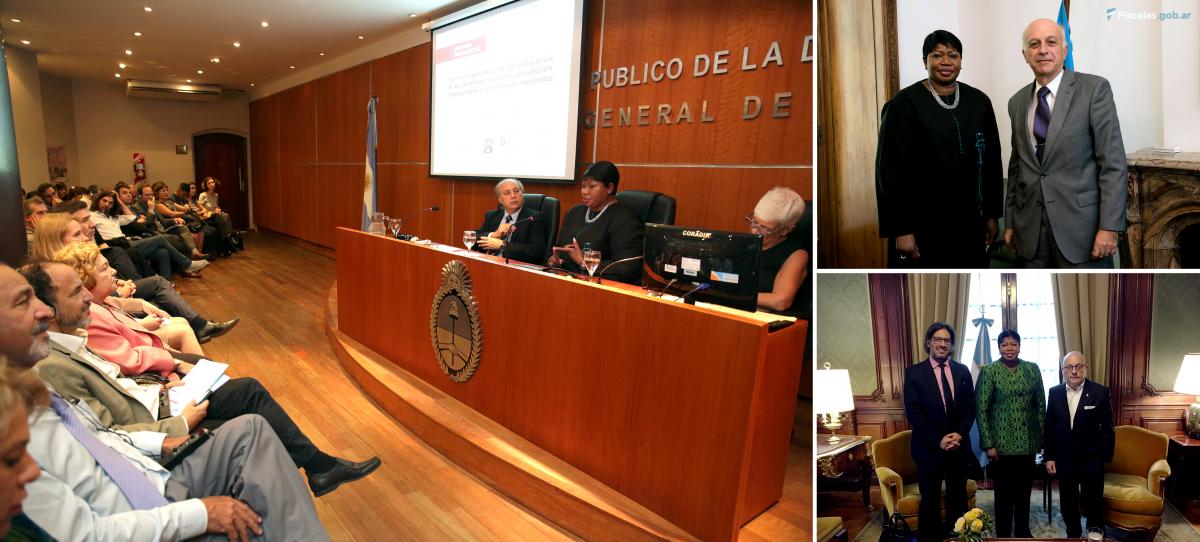
The Prosecutor of the International Criminal Court ("ICC" or the "Court"), Fatou Bensouda, conducted her first mission to the Republic of Argentina from the 8th to the 12th of April, 2018.
The four-day programme included the Prosecutor's participation in a high level conference marking the 20th anniversary of the adoption of the Rome Statute establishing the ICC. At the conference, she stressed the importance of the creation of the ICC and need for continued support and cooperation. Referring to the 1998 Rome conference where the ICC was born, she stated, "Argentina fully understood, as did many other states which have experienced the tragedy that befalls a nation when atrocities are committed, the value of such a permanent international court and the historic opportunity that presented itself, " adding "Argentina, and many other states represented there, seized that crucial moment, and I wanted to take this opportunity to express my appreciation for that collective visionary leadership and commitment to the fight against impunity".
She also conducted a series of bilateral meetings with the authorities, including notably with H.E. Mr Jorge Marcelo Faurie, Minister of Foreign Affairs and Worship, H.E. Mr Germán Carlos Garavano, Minister for Justice and Human Rights, and H.E. Mr Eduardo Ezequiel Casal, the Attorney-General of Argentina.
Prosecutor Bensouda and her delegation further participated in an international seminar organized by the University of Lanús where she delivered a lecture on the investigation and prosecution of sexual and gender-based crimes and crimes against and affecting children from the perspective of her Office. She thanked the University of Lanús for graciously hosting her and her team and for the notable commitment of the University to raising awareness and the promotion of accountability for atrocity crimes and gross violations of human rights.
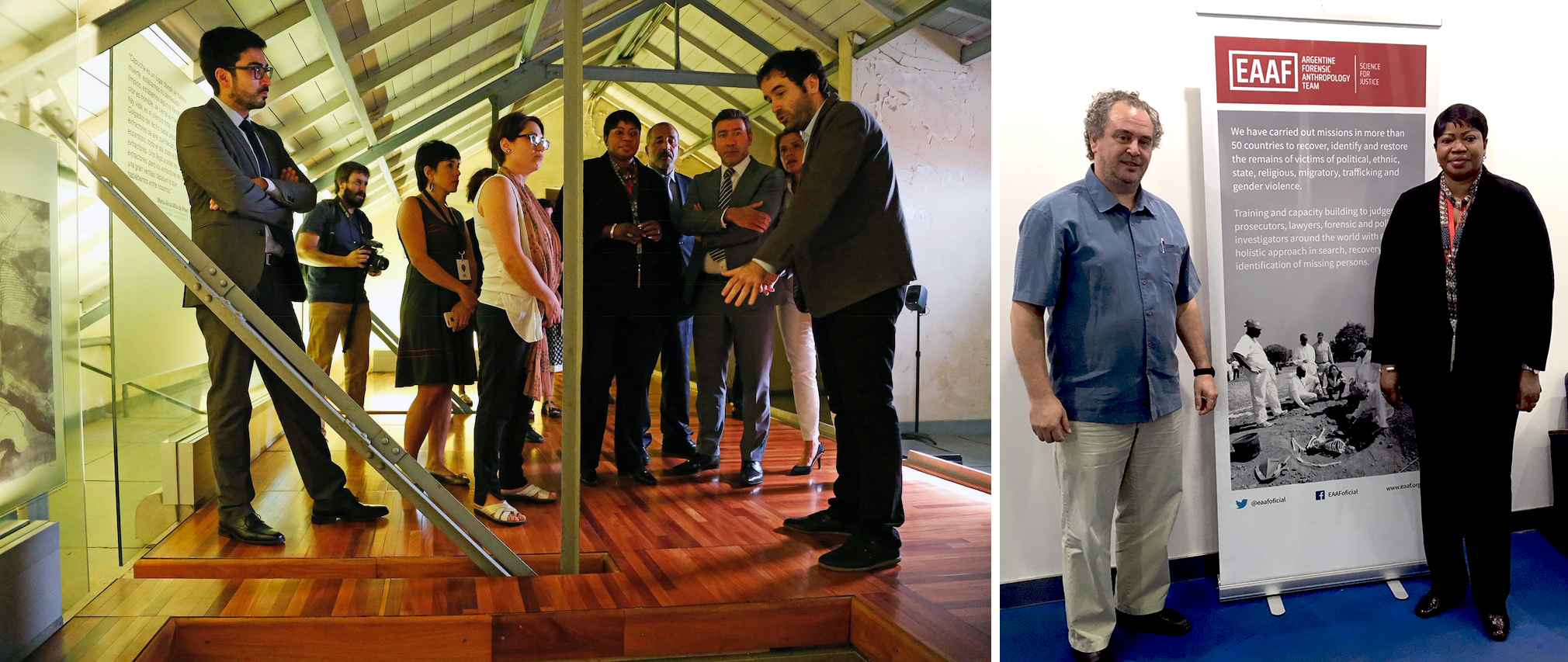
ICC Prosecutor, Mrs Fatou Bensouda, visits the Museum of Memory and Human Rights Site ESMA and Argentine Forensic Anthropology Team
During the course of her mission, she visited the Museum of Memory and Human Rights Site ESMA, which was infamously used as the former Clandestine Centre for Detention, Torture and Extermination during the dictatorship years of 1976 to 1983. She also visited the Argentine Forensic Anthropology Team (EAAF), located on the ESMA site.
While in Argentina, Prosecutor Bensouda also took the opportunity to engage with national media to explain to the public her mandate and activities as Prosecutor of the ICC. She used the occasion to stress the importance of State Party cooperation, and in this context, commended Argentina for signing all four cooperation agreements with the ICC, including most recently agreements on interim release and release of ICC detained persons.
The ICC's Office of the Prosecutor conducts independent and impartial preliminary examinations, investigations and prosecutions of the crime of genocide, crimes against humanity and war crimes. Since 2003, the Office has been conducting investigations in multiple situations within the ICC's jurisdiction, namely in Uganda; the Democratic Republic of the Congo; Darfur, Sudan; the Central African Republic (two distinct situations); Kenya; Libya; Côte d'Ivoire; Mali; Georgia and Burundi. Pre-Trial Chamber II is seized of the Prosecutor's request for authorisation to commence an investigation into the situation in the Islamic Republic of Afghanistan. The Office is also conducting preliminary examinations relating to the situations in Colombia; the Gabonese Republic; Guinea; Iraq/UK; Palestine; The Philippines, Nigeria; Venezuela and Ukraine.
La Fiscal de la Corte Penal Internacional ("CPI" o "Corte"), Fatou Bensouda, puso fin a la primera misión en la República Argentina, que tuvo lugar del 8 al 12 de abril de 2018.
En el marco del programa de cuatro días, la Fiscal participó en una conferencia de alto nivel celebrada para conmemorar el 20º aniversario de la aprobación del Estatuto de Roma, por el que se estableció la CPI. En la conferencia recalcó la importancia de la creación de la CPI y la necesidad de que esta siguiera recibiendo apoyo y cooperación. En relación con la conferencia de Roma de 1998 de la que surgió la CPI, afirmó lo siguiente: "La Argentina, al igual que otros muchos Estados conocedores de primera mano de la tragedia que acontece a un país cuando se cometen atrocidades, entendió perfectamente el valor de una corte internacional permanente de ese tipo, así como la oportunidad histórica que se presentaba" y añadió que "la Argentina y otros muchos Estados allí representados aprovecharon ese momento crucial, y deseo aprovechar la ocasión para expresar mi agradecimiento por ese liderazgo y compromiso, de carácter visionario y colectivo, en la lucha contra la impunidad".
La Fiscal también celebró una serie de reuniones bilaterales con las autoridades, en particular con el Excmo. Sr. Jorge Marcelo Faurie, Ministro de Relaciones Exteriores y Culto, el Excmo. Sr. Germán Carlos Garavano, Ministro de Justicia y Derechos Humanos, y el Excmo. Sr. Eduardo Ezequiel Casal, Procurador General de la Argentina.
La Fiscal Bensouda y su delegación participaron además en un seminario internacional organizado por la Universidad de Lanús en el que la Fiscal dio una conferencia sobre la investigación y el enjuiciamiento desde la perspectiva de su Fiscalía de los
delitos sexuales y por motivos de género y
los delitos cometidos contra niños o que afectan a los niños. Dio las gracias a la Universidad de Lanús por la amable acogida de que habían sido objeto ella y su equipo y por el notable compromiso de la Universidad con la sensibilización y la promoción en el ámbito de la rendición de cuentas respecto de los crímenes de atrocidad y las violaciones graves de los derechos humanos.
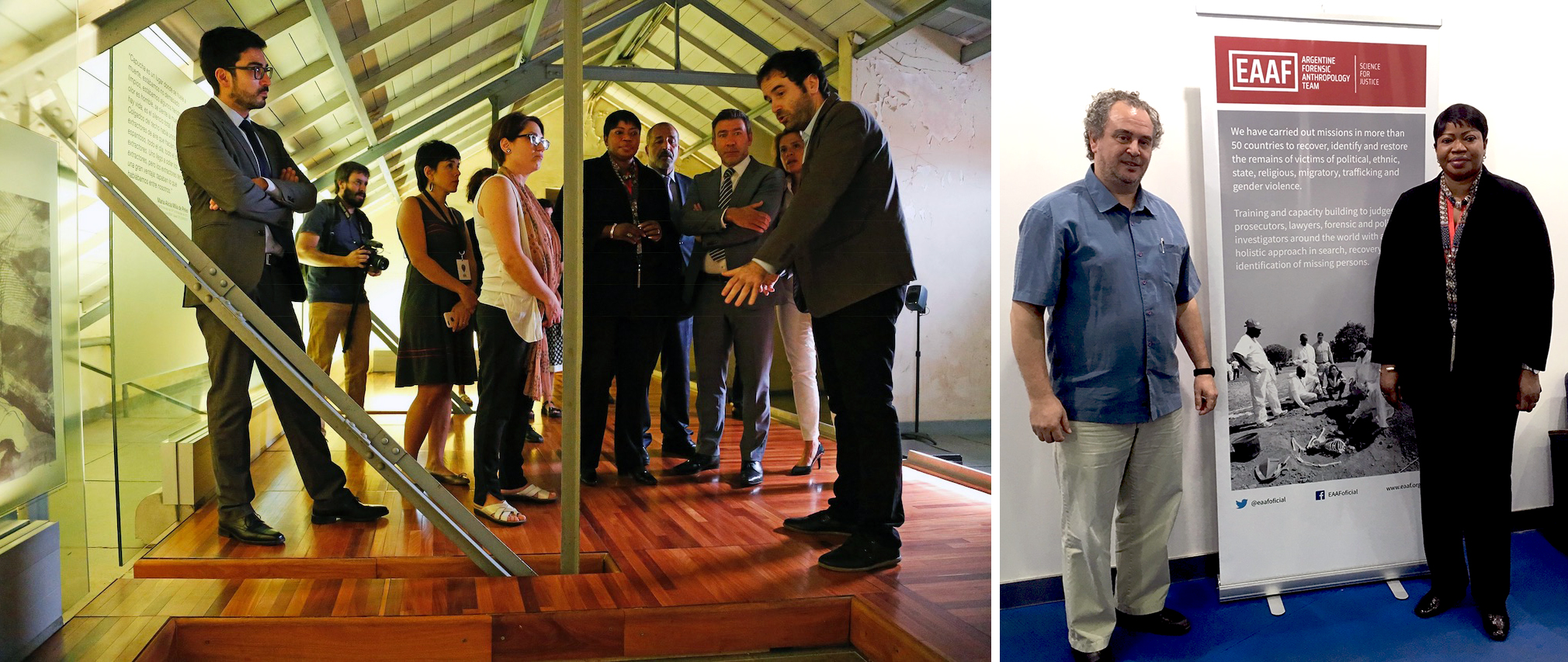
La Fiscal de la CPI, la Sra. Fatou Bensouda, visita el Museo Sitio de Memoria ESMA y el Equipo Argentino de Antropología Forense
En el curso de su misión, visitó el Museo Sitio de Memoria ESMA, que infamemente funcionó como centro clandestino de detención, tortura y exterminio en los años de la dictadura transcurridos de 1976 a 1983. También visitó el Equipo Argentino de Antropología Forense (EAAF), ubicado en el sitio del ESMA.
Durante su estancia en la Argentina la Fiscal Bensouda también aprovechó la oportunidad para atender a medios de comunicación nacionales con el objeto de explicar al público su mandato y actividades como Fiscal de la CPI. Al respecto, subrayó la importancia de la cooperación de los Estados partes y, en ese contexto, encomió a la Argentina por haber firmado cuatro acuerdos de cooperación con la CPI, entre ellos los últimos acuerdos de libertad provisional y libertad de detenidos de la CPI.
La Fiscalía de la CPI lleva a cabo exámenes preliminares, investigaciones y enjuiciamientos independientes e imparciales de los crímenes de genocidio, crímenes de lesa humanidad y crímenes de guerra. Desde 2003 realiza investigaciones en varias situaciones que son de la competencia de la CPI, como en Uganda, la República Democrática del Congo, Darfur (Sudán), la República Centroafricana (dos situaciones distintas), Kenya, Libia, Côte d'Ivoire, Malí, Georgia y Burundi. La Sala de Cuestiones Preliminares II se ocupa de la solicitud de la Fiscal de autorización para emprender una investigación de la situación en la República Islámica del Afganistán. La Fiscalía también lleva a cabo exámenes preliminares en relación con las situaciones en Colombia, la República Gabonesa, Guinea, el Iraq/Reino Unido, Palestina, Filipinas, Nigeria, Venezuela y Ucrania.
[email protected]